
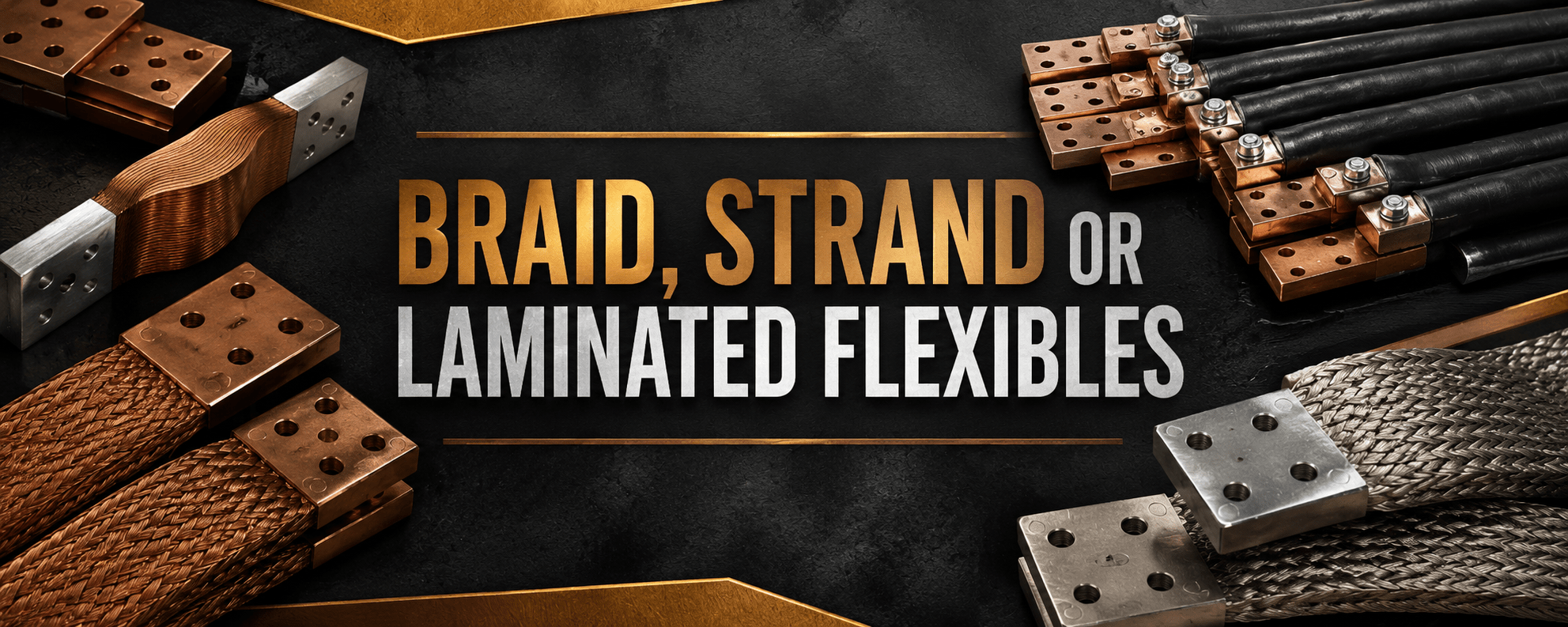
Choosing the Right Copper Flexible for the Application
Not Every Copper Flexible Is Designed for the Same Application
When specifying copper flexibles for an industrial electrical system, selecting the right type goes beyond just matching the current rating. Each application has different mechanical and electrical needs. Choosing the wrong flexible can cause premature wear, unnecessary maintenance, or lower system reliability.
Whether the need is to absorb vibration, allow thermal expansion, provide movement between fixed connection points, or replace an existing part, the flexible must be designed for its specific use.
Braided, strand, and laminated flexibles each have unique features that make them suitable for various operating conditions. Understanding these differences helps procurement teams, electrical engineers, maintenance staff, and OEMs pick the best solution from the start.
Start with the Application, Not the Product
One common mistake when ordering flexible copper connectors is to request a replacement based only on dimensions. While overall length matters, several other factors influence whether the flexible will work correctly after installation.
Before production starts, consider:
- Continuous and peak current requirements
- Required flexibility and movement
- Mechanical vibration
- Thermal expansion
- Installation space
- Palm dimensions
- Hole size and hole spacing
- Number of fixing points
- Operating environment
- Replacement compatibility
Each of these factors impacts the final design.
Braided Copper Flexibles
Braided flexibles consist of multiple woven copper strands. They offer excellent flexibility and high electrical conductivity. These are often used where constant movement or vibration occurs during normal operation.
Common applications include:
- Transformer connections
- Switchgear
- Generators
- Busbar expansion joints
- Motor connections
- Railway applications
- Mining equipment
Their woven design allows repeated movement without placing excessive stress on connection points. Braided flexibles are particularly useful where vibration isolation is necessary.
When Braided Flexibles Are the Right Choice
Braided flexibles work well when:
- Equipment vibrates continuously
- Frequent movement is expected
- High flexibility is needed for installation
- Mechanical stress must be isolated
- Existing rigid connections are wearing out
Their flexibility helps reduce stress on electrical equipment while ensuring reliable current flow.
Strand Copper Flexibles
Strand flexibles are created with bundles of fine copper wires into flexible conductors. They provide excellent conductivity and greater mechanical strength than braided options, making them ideal for applications that need both flexibility and higher current capacity.
You’ll often find them in:
- High-current industrial equipment
- Distribution panels
- Transformer installations
- Heavy manufacturing
- Power generation
Depending on how they are built, strand flexibles can also include insulation when necessary.
When Strand Flexibles Are the Better Option
Strand flexibles are often chosen when:
- Higher current capacities are needed
- Moderate flexibility works
- Mechanical durability is crucial
- Space for installation is limited
- Robust conductor construction is required
They offer a great balance between conductivity and strength.
Laminated Copper Flexibles
Laminated flexibles are made from thin copper layers stacked together and then welded or riveted into solid palms. Unlike braided products, movement happens through bending the individual layers. This design has several benefits when controlled movement and high-current transfer are needed.
Common applications include:
- Busbar systems
- Generator connections
- Transformer terminals
- Furnace equipment
- Medium and high-voltage installations
- Industrial switchgear
Since each layer shares the electrical load, laminated flexibles provide excellent conductivity while allowing for expansion and movement.
Where Laminated Flexibles Excel
Laminated flexibles work best when:
- High current is continuously carried
- Thermal expansion needs to be managed
- Controlled movement is required
- Low electrical resistance is important
- Equipment reliability is essential
They are used in challenging industrial settings where stiff busbars can’t accommodate movement.
Current Rating Is Only One Aspect of the Design
Many buyers start by asking for a current rating. While capacity is essential, it shouldn’t be considered alone.
A properly made flexible also takes into account:
- Ambient operating temperature
- Duty cycle
- Installation orientation
- Ventilation
- Number of conductors
- Mechanical loading
- Future maintenance access
Each installation has unique conditions that affect the final design.
Hole Patterns and Palm Dimensions Matter
One often overlooked part of ordering replacement industrial copper connections is the connection interface itself.
A flexible might have the right current capacity but could still be unusable if:
- Hole centers differ
- Palm width is incorrect
- Hole diameter is wrong
- Palm thickness prevents proper clamping
- Overall length changes movement characteristics
Accurate measurements cut down on installation delays and minimize modifications on site.
Consider the Environment
The operating environment often dictates which type of flexible is best suited.
Factors include:
- Dust
- Moisture
- Corrosive environments
- Outdoor exposure
- High ambient temperatures
- Chemical processing
- Continuous vibration
Choosing the right construction helps extend service life while ensuring reliable electrical performance.
Custom Manufacturing Delivers Better Long-Term Performance
Industrial electrical systems aren’t usually the same. For this reason, standard off-the-shelf products may not always be the best choice.
Custom-made copper flexibles let every aspect of the component fit the application, including:
- Length
- Width
- Palm design
- Hole configuration
- Current rating
- Flexible section
- Mounting arrangement
- Material specification
This ensures the flexible fits the first time correctly, reducing installation time and improving long-term reliability.
Choosing the Right Flexible Starts with the Right Information
Whether you need a braided flexible for vibration isolation, a strand flexible for strong current transfer, or a laminated flexible for thermal expansion and controlled movement, the right solution begins with understanding the application.
Providing accurate measurements, operating conditions, and electrical requirements helps manufacturers recommend the best design.
At Mega Flexibles & Busbars, every flexible is made for the application it will serve. From one-off replacements to large production runs, each component is designed to meet the mechanical and electrical needs of its environment.
Contact Mega Flexibles & Busbars
If you need custom-made copper flexibles, braided, strand and laminated flexibles, or other industrial copper connections, reach out to discuss your application needs.
mark@megaflexibles.co.za / 084 434 3621
Whether you have a detailed drawing, an existing sample, or just the application requirements, Mega Flexibles & Busbars can create a solution specifically for your installation.